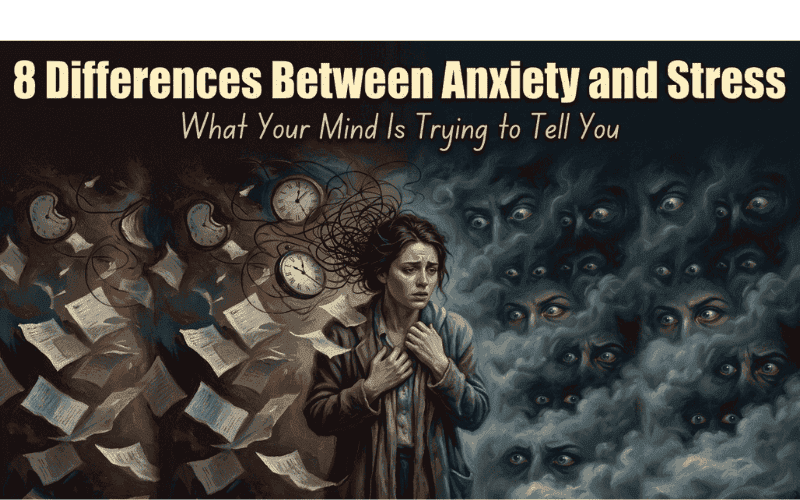
You wake up tired even after sleeping for hours. Your thoughts feel loud. Small problems suddenly feel huge. Maybe your chest feels tight before work, or your mind keeps replaying the same worries late at night. At some point, you probably asked yourself a simple question:
"Am I stressed… or is this anxiety?"
Many people use the words stress and anxiety interchangeably, but they are not the same thing. They can overlap, and they often show up together, yet the way they affect your mind, emotions, and body can be very different.
Understanding the 8 differences between anxiety and stress can help you recognize what you are experiencing and choose healthier ways to cope with it. It can also help you stop blaming yourself for feelings you do not fully understand.
This guide breaks everything down in a simple, practical, and compassionate way so you can better understand what is happening inside your mind and body.
What Is Stress?
Stress is your body's natural response to pressure. It usually appears when something in your life demands attention or action. Your brain notices a challenge, and your body reacts by entering a "fight or flight" state.
Stress can come from many situations, including:
- Deadlines at work
- Financial pressure
- Relationship problems
- Exams or school responsibilities
- Parenting challenges
- Major life changes
- Health concerns
In small amounts, stress is not always harmful. Sometimes it pushes you to focus, solve problems, or finish important tasks. For example, feeling stressed before a presentation may motivate you to prepare better.
But when stress becomes constant, your body stays in survival mode for too long. That can affect your sleep, mood, concentration, digestion, and even your immune system.
Common symptoms of stress include:
- Muscle tension
- Headaches
- Irritability
- Fatigue
- Difficulty sleeping
- Trouble focusing
- Increased heart rate
Stress usually has a clear cause. Once the situation improves, the stress often decreases as well.
What Is Anxiety?
Anxiety is different. While stress is often connected to an external situation, anxiety tends to come from internal fear, worry, or anticipation.
You can feel anxious even when nothing dangerous is happening.
That is what makes anxiety confusing for many people. Your mind and body react as if there is a threat, even if you cannot identify one clearly.
Anxiety may involve:
- Constant overthinking
- Fear about the future
- Excessive worrying
- Feeling restless
- Panic or dread
- Difficulty relaxing
Everyone experiences anxiety occasionally. Feeling nervous before an interview or a medical appointment is normal. However, anxiety becomes more serious when it starts interfering with daily life.
Persistent anxiety can affect your relationships, work performance, sleep, physical health, and overall well-being.
Some people experience anxiety disorders such as:
- Generalized Anxiety Disorder (GAD)
- Social Anxiety Disorder
- Panic Disorder
- Health Anxiety
If anxiety feels constant, intense, or difficult to control, professional support can help. This article is informational only, and I am not a doctor or mental health professional.
1. Stress Usually Has a Clear Trigger While Anxiety Often Does Not
One of the biggest differences between anxiety and stress is the source.
Stress is usually linked to something specific. You may feel stressed because of:
- A difficult boss
- Bills you need to pay
- Family responsibilities
- A busy schedule
Once the stressful situation passes, your symptoms often improve.
Anxiety, on the other hand, can appear without an obvious reason. You may wake up feeling nervous even on a calm day. Your mind may create "what if" scenarios constantly, even when everything seems fine.
For example:
Stress says:
"I have too much work this week."
Anxiety says:
"What if I fail at everything and disappoint everyone?"
Stress focuses on the current challenge. Anxiety often focuses on imagined future problems.
2. Stress Is Usually Temporary While Anxiety Can Last Much Longer
Stress often fades when the pressure disappears.
After finishing exams, resolving conflict, or completing a project, your body gradually relaxes again. You may feel exhausted for a while, but the emotional intensity decreases.
Anxiety does not always work that way.
Anxiety can linger for weeks, months, or even years if left unmanaged. Even after one worry disappears, another may quickly replace it.
This ongoing mental tension can feel draining because your brain rarely gets a chance to rest.
You might notice:
- Constant worrying
- Trouble relaxing
- Fear that never fully leaves
- Difficulty feeling calm even during peaceful moments
Long-term anxiety can also increase the risk of burnout and emotional exhaustion.
3. Stress Comes From External Pressure While Anxiety Comes From Internal Fear
Stress usually begins outside of you.
A difficult situation creates pressure, and your body responds.
Anxiety often starts inside your thoughts.
Your mind may continuously search for danger, rejection, embarrassment, failure, or uncertainty. Even small situations can trigger overwhelming fear.
For example:
- Stress: "I need to finish this report."
- Anxiety: "What if everyone thinks I am incompetent?"
This internal fear loop can become exhausting because your brain stays alert even when there is no immediate threat.
Overthinking is also more common with anxiety. You may replay conversations repeatedly, imagine worst-case scenarios, or worry excessively about things that have not happened.
4. Physical Symptoms Can Feel Similar but Anxiety Is Often More Intense
Stress and anxiety can create similar physical symptoms because both activate your body's stress response system.
Common symptoms shared by both include:
- Sweating
- Rapid heartbeat
- Shallow breathing
- Muscle tension
- Trouble sleeping
- Fatigue
However, anxiety symptoms are often stronger and more persistent.
Some people with anxiety experience:
- Panic attacks
- Chest tightness
- Dizziness
- Nausea
- Tingling sensations
- Feeling detached from reality
- Fear of losing control
A panic attack can feel terrifying, especially if you have never experienced one before. Some people even mistake panic attacks for heart attacks.
Because anxiety affects both the mind and body, the symptoms can sometimes feel overwhelming even in ordinary situations.
5. Stress Can Motivate You While Anxiety Often Drains You
Not all stress is negative.
Short-term stress can improve focus and productivity. For example, a deadline may push you to complete work faster. Athletes, students, and professionals often perform better under manageable levels of stress.
This is sometimes called "productive stress."
Anxiety works differently.
Instead of motivating you, anxiety often creates avoidance, fear, and paralysis.
You may procrastinate because your thoughts feel overwhelming. Simple tasks may suddenly feel impossible. Even making small decisions can become emotionally exhausting.
You might notice yourself:
- Avoiding phone calls
- Delaying responsibilities
- Overthinking every choice
- Feeling mentally frozen
Stress pushes you forward temporarily. Anxiety often holds you back.
6. Stress Is Usually Focused on One Problem While Anxiety Spreads Everywhere
Stress is often connected to one specific area of life.
For example:
- Work stress
- Financial stress
- School stress
Anxiety rarely stays in one place.
It tends to spread across multiple parts of your life. One small worry can quickly become several fears connected together.
You may start worrying about:
- Your health
- Your relationships
- Your future
- Your finances
- Other people's opinions
- Mistakes from the past
This constant mental scanning creates emotional exhaustion because your brain never fully switches off.
Anxiety also increases catastrophic thinking. Small situations may feel much bigger than they really are.
For example:
"I made one mistake at work" can become:
"I am going to lose my job and ruin my future."
7. Stress Relief Techniques May Help Stress Faster Than Anxiety
Stress often improves when you rest and recover.
Helpful stress-management strategies include:
- Better sleep
- Exercise
- Taking breaks
- Spending time outdoors
- Time management
- Talking with supportive people
For many people, these habits reduce stress significantly.
Anxiety may require deeper support.
While healthy habits still matter, anxiety sometimes needs additional coping tools such as:
- Therapy
- Cognitive Behavioral Therapy (CBT)
- Mindfulness techniques
- Breathing exercises
- Medication prescribed by a professional
This does not mean anxiety is weakness. It simply means your nervous system may need more support and regulation.
Many people silently struggle with anxiety for years because they assume they should "just calm down." Unfortunately, anxiety is rarely that simple.
8. Anxiety Can Become a Mental Health Condition While Stress Usually Does Not
Stress is generally considered a temporary response to pressure.
Anxiety can develop into a recognized mental health condition when symptoms become persistent and interfere with daily life.
Signs that anxiety may require professional attention include:
- Constant fear or worry
- Panic attacks
- Avoiding normal situations
- Difficulty functioning daily
- Severe sleep problems
- Persistent physical symptoms
- Feeling emotionally overwhelmed most of the time
Seeking help does not mean something is wrong with you. It means you are taking your mental well-being seriously.
If your symptoms feel intense or long-lasting, speaking with a qualified mental health professional can be helpful.
Again, I am not a doctor, and this article should not replace medical advice.
Signs You May Be Experiencing Anxiety Instead of Stress
Sometimes the line between stress and anxiety feels blurry. However, certain signs may suggest anxiety is playing a larger role.
You may be dealing with anxiety if you regularly experience:
- Worry that feels difficult to control
- Fear without a clear reason
- Trouble concentrating
- Constant overthinking
- Panic attacks
- Restlessness
- Avoiding situations out of fear
- Persistent sleep problems
- Feeling mentally exhausted all the time
Pay attention to how long your symptoms last and how much they affect your daily life.
How to Cope With Stress and Anxiety
The good news is that both stress and anxiety can become more manageable with healthy support systems and coping habits.
Healthy Ways to Manage Stress
Here are some practical ways to reduce stress naturally:
- Create a realistic daily schedule
- Prioritize sleep
- Exercise regularly
- Spend less time multitasking
- Take short mental breaks
- Limit excessive caffeine
- Spend time with supportive people
Even small habits can help your nervous system feel safer and calmer.
Healthy Ways to Manage Anxiety
Managing anxiety often involves calming both your thoughts and your body.
Helpful techniques include:
- Deep breathing exercises
- Meditation
- Grounding techniques
- Journaling
- Therapy or counseling
- Reducing overstimulation
- Practicing self-compassion
One simple grounding exercise is the "5-4-3-2-1 method."
You identify:
- 5 things you can see
- 4 things you can touch
- 3 things you can hear
- 2 things you can smell
- 1 thing you can taste
This technique helps bring your attention back to the present moment instead of staying trapped in anxious thoughts.
When Should You Seek Professional Help?
It may be time to seek support if your symptoms:
- Interfere with work or relationships
- Affect your sleep regularly
- Cause panic attacks
- Make daily life feel difficult
- Leave you feeling emotionally overwhelmed most days
You do not need to wait until things become unbearable before asking for help.
Mental health support exists for a reason, and reaching out can make a meaningful difference.
Frequently Asked Questions About the 8 Differences Between Anxiety and Stress
What are the main 8 differences between anxiety and stress?
The biggest differences involve triggers, duration, emotional impact, physical symptoms, and how each affects daily life. Stress is often temporary and linked to external pressure, while anxiety tends to involve persistent internal fear and worry.
Can stress turn into anxiety?
Yes. Chronic stress can contribute to anxiety over time, especially if your mind and body stay in survival mode for long periods without recovery.
Which is worse: anxiety or stress?
Neither experience should be ignored. However, anxiety often lasts longer and may affect mental health more deeply if left unmanaged.
How do you know if you have anxiety or just stress?
Stress usually has a clear cause and improves once the situation changes. Anxiety tends to continue even without an obvious trigger and may involve excessive worry or fear.
Are anxiety and stress treated the same way?
Some coping strategies overlap, such as sleep, exercise, and relaxation techniques. However, anxiety may require professional treatment or therapy depending on severity.
Final Thoughts
Learning the 8 differences between anxiety and stress can help you understand yourself with more clarity and compassion.
Stress is part of being human. Anxiety is also more common than many people realize. The important thing is recognizing when your mind and body are asking for support instead of ignoring the signs.
You deserve moments of calm. You deserve rest without guilt. And you deserve support if life starts feeling emotionally heavy.
If this article helped you better understand the difference between anxiety and stress, consider sharing it with someone who may need it too. Sometimes one conversation can help another person feel a little less alone.