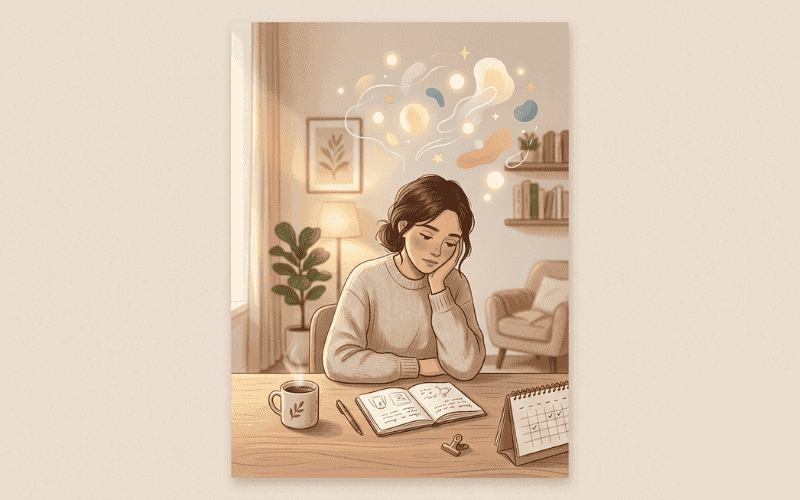
You usually don't notice it at first.
At the beginning, you tell yourself you're just busy, just tired, just dealing with a lot right now. You keep going. You still show up, still complete tasks, still respond to messages, still push through your day.
But something shifts slowly in the background.
You start needing more effort for the same things. Things that used to feel simple now feel heavier. Even rest doesn't feel fully restorative anymore.
This is how the stages of burnout often begin—not with a dramatic breaking point, but with small signals you learn to ignore.
If you're reading this, part of you is probably trying to understand what's been changing in your energy, focus, or motivation. This guide helps you recognize those shifts clearly, without overcomplicating them.
Understanding the Stages of Burnout in a Simple Way
Burnout isn't a switch that flips. It's a gradual process where your mental, emotional, and physical energy starts to drain over time.
You can think of the stages of burnout as a progression:
- You start with high drive and effort
- Then fatigue quietly increases
- Motivation begins to drop
- Emotional distance or numbness can appear
Not everyone goes through these stages in the same order or intensity, but the pattern often feels familiar when you look back.
The key idea here is simple: the earlier you recognize the pattern, the easier it becomes to adjust your direction.
Stage 1 of the Stages of Burnout — The "I Can Handle It" Phase
This is the stage most people overlook because it still feels productive.
On the surface, you might even feel like you're doing well. You're active, committed, and pushing yourself forward.
But underneath, something subtle starts happening:
- You take on more than usual
- You feel pressure to perform consistently
- Rest feels optional, not necessary
- You start ignoring small signs of fatigue
- You say "I'll rest later" more often than you realize
At this point, your energy is still available, but you're spending it faster than you're recovering it.
The danger of this stage is how normal it feels. You don't think anything is wrong—you think you're just being responsible.
Stage 2 — When Energy Starts to Drop in the Stages of Burnout
This is where things start to feel different.
You're still functioning, but it takes more effort than before. Tasks that used to be automatic now require mental push.
Common signs at this stage:
- You wake up feeling tired more often
- Your focus feels less stable
- You procrastinate even on small tasks
- You feel mentally "full" or overloaded
- Your patience becomes shorter than usual
You may also notice that rest doesn't hit the same way anymore. Even after a break, you don't feel fully reset.
This stage is often where people start wondering, "Why am I not feeling like myself lately?"
It's not about weakness or lack of discipline. It's about sustained pressure without enough recovery space.
Stage 3 — Emotional Fatigue and Loss of Drive
At this stage of the stages of burnout, motivation doesn't just dip—it becomes inconsistent.
You may still care about your responsibilities, but the emotional connection to them starts fading.
You might notice:
- A strong sense of mental exhaustion most days
- Reduced interest in things you used to enjoy
- Feeling detached while completing tasks
- A sense of "just getting through the day"
- Less excitement about future plans
This is where things can feel confusing. On paper, your life may look the same, but internally it feels different.
You're not necessarily stopping—you're just running on less internal fuel.
This stage often leads people to isolate more, not because they want to, but because everything feels like it requires energy they don't have.
Stage 4 — Deep Exhaustion and Emotional Shutdown in the Stages of Burnout
This is the most intense phase, where emotional and mental energy feel significantly reduced.
At this point, you may experience:
- Feeling emotionally "flat" or disconnected
- Avoiding social interaction more often
- Reduced reaction to things that used to matter
- A strong need to withdraw and be alone
- A sense of being mentally "checked out"
It's not about losing capability—it's about your internal system trying to protect itself by reducing output.
Even simple decisions can feel heavy. Motivation feels distant, not just low.
This stage is often a signal that your system has been under sustained pressure for a long time without enough recovery space.
What Often Contributes to the Stages of Burnout
Burnout rarely comes from one single cause. It's usually a mix of patterns that build over time.
Some common contributors include:
- Long periods of high responsibility without balance
- Constant mental or emotional pressure
- Difficulty setting limits on time and energy
- High expectations placed on yourself
- Lack of recovery moments during the week
- Always being "on" without real downtime
What matters here is not blame—it's awareness. These patterns often develop slowly and feel normal while they're happening.
How You Can Start Understanding Your Own Pattern
Instead of trying to label yourself perfectly, it helps to notice trends.
You can reflect on questions like:
- Do you feel more drained than usual most days?
- Has your motivation shifted noticeably over time?
- Do simple tasks feel heavier than they used to?
- Are you withdrawing more from people or activities?
- Do you feel like you're operating on autopilot?
If several of these feel familiar, it may indicate you're moving through one of the stages of burnout rather than just having a "bad week."
Awareness here is not about judgment—it's about clarity.
Small Direction Shifts That People Often Explore
When people start recognizing these patterns, they usually begin by making small adjustments instead of drastic changes.
Some common shifts include:
- Reducing unnecessary commitments
- Protecting time for rest without multitasking
- Creating clearer boundaries around availability
- Spending time on low-pressure activities
- Allowing slower days without guilt
- Rebuilding simple routines that feel manageable
These aren't instant fixes—they're gradual resets that help you regain balance over time.
Conclusion — Where You Are Matters Less Than What You Notice Now
The stages of burnout aren't a label you need to fit into perfectly. They're a way to understand patterns that often go unnoticed until they build up.
If you recognize yourself in any part of this, the most important thing is awareness. Once you see the pattern, you can start making different choices with your time, energy, and boundaries.
You don't need to have everything figured out today. You just need to notice what your current rhythm is telling you.
FAQ — Stages of Burnout Explained in Simple Terms
How do I know which stage I'm in?
Look at patterns in your energy, focus, motivation, and emotional response over time rather than a single moment.
What are the stages of burnout in simple words?
They are gradual phases where your energy, motivation, and emotional capacity slowly decrease over time.
Is it normal to miss the early signs?
Yes, many people only notice the pattern once fatigue becomes more consistent.
Can the stages of burnout change over time?
Yes, they can shift depending on your workload, rest, and daily habits.
What should I do if I relate to these stages?
Start by observing your daily energy patterns and making small adjustments to your workload and rest balance.
Call to Action
If this article helped you recognize where you might be in the stages of burnout, take a moment today to pause and observe your current rhythm. Even a small adjustment in how you manage your energy can start shifting things over time.
And if you want more guides like this, focused on clarity, balance, and real-life self-awareness, explore more content and continue building a version of your daily life that feels lighter and more sustainable.