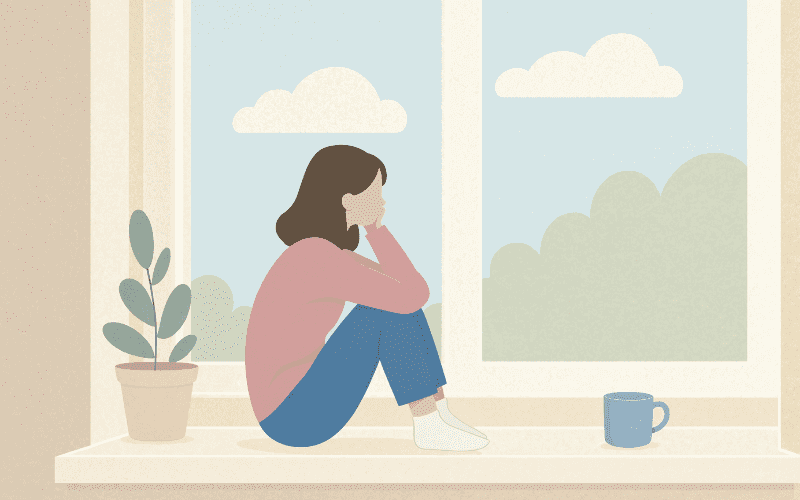
There is a moment you might already know too well. Nothing dramatic happens, nothing painful on the surface, yet everything feels flat. You wake up, follow the same rhythm, see the same faces, scroll the same feeds, and still feel like something important is missing.
It is not always sadness. It is more like emotional silence. You are functioning, but not really feeling anything meaningful. Days pass quickly, but nothing seems to stick in your memory.
You may even start questioning yourself in a quiet way: why does everything feel so repetitive, so predictable, so "same"?
This state is what most people describe as bordem, and even if the spelling is often simplified online, the feeling behind it is very real. It is not a flaw in you. It is usually a signal that your brain is craving novelty, meaning, and emotional stimulation again.
And the important part is this: you can change it.
What Is Bordem and Why You Feel It in Everyday Life
Bordem is a mental state that shows up when your brain is under stimulated. In simple terms, you are not getting enough novelty, challenge, or emotional engagement from your environment.
When this happens, your attention starts drifting. Things that normally feel interesting suddenly feel heavy or pointless. Even simple tasks can feel like they require effort.
Why your brain reacts this way
Your brain is built to notice change and reward discovery. When life becomes repetitive:
- Your dopamine response becomes lower
- Your attention system stops feeling "activated"
- Your motivation naturally drops
- Everything starts feeling mentally "gray"
This is not random. It is biology.
Researchers in cognitive psychology and neuroscience have found that novelty plays a key role in motivation and reward processing. When novelty disappears, interest often drops with it.
Bordem is not the same as burnout or depression
It helps to separate these states:
- Bordem: lack of stimulation or interest
- Burnout: emotional and physical exhaustion from overwork
- Depression: deeper mood disorder involving persistent sadness and loss of pleasure
If you feel bored but still have energy and emotional range, you are likely dealing with stimulation imbalance, not a clinical condition.
Why Feeling Bored With Life Is More Common Than You Think
You might assume boredom means something is wrong with your personality or lifestyle. In reality, it is becoming extremely common in modern life.
1. Your routine has become too predictable
Humans adapt quickly. What felt new a few months ago now feels automatic. Work, sleep, phone, repeat. Your brain stops registering novelty in repetitive patterns.
2. You are exposed to too much digital stimulation
Ironically, too much stimulation can also create boredom.
Social media gives:
- Fast content switching
- Constant comparison
- Short bursts of dopamine
But it removes depth. After a while, real life feels slower than your screen, which makes everything else feel "boring."
3. You may lack a clear direction
When you do not have a meaningful goal, your brain has no emotional anchor. Days become interchangeable.
Even small purpose shifts your perception of time and energy.
4. You are mentally overloaded but emotionally underfed
You might be busy, but not fulfilled. That gap often creates inner emptiness.
10 Simple Ways to Beat Bordem and Bring Excitement Back Into Your Life
You do not need a dramatic life overhaul. What you need is small, intentional disruption of your current patterns.
1. Change Your Daily Routine on Purpose
Your brain thrives on pattern breaks.
You can start small:
- Take a different route to work or school
- Change your morning order (eat first, then shower)
- Rearrange your room slightly
These changes seem minor, but they force your brain to re-engage with your environment.
2. Try Something You Have Never Done Before
New experiences activate parts of your brain linked to learning and reward.
You could:
- Cook a dish from a completely different culture
- Learn a basic skill like editing or drawing
- Try a new sport or physical activity
The goal is not mastery. It is exposure.
Neuroscience research shows that novelty increases dopamine activity, which improves motivation and mood.
3. Reduce the Noise From Your Digital Life
If your attention is constantly divided, nothing feels interesting anymore.
Try this:
- Set a fixed time for social media
- Remove apps that drain your attention
- Avoid scrolling in the first hour after waking up
You are not removing entertainment. You are restoring sensitivity to real life.
4. Move Your Body Every Single Day
Movement is one of the fastest ways to reset your emotional state.
You do not need a gym routine. You can:
- Walk for 20 minutes
- Stretch your body in the morning
- Do light home workouts
Physical movement increases dopamine and serotonin, which directly affects motivation and energy.
5. Give Yourself Small Daily Goals
When everything feels boring, large goals feel overwhelming.
Instead, focus on small wins:
- Read 10 pages
- Clean one area of your space
- Learn one new fact
Your brain responds strongly to completion. Each small win rebuilds momentum.
6. Talk to New People or Change Your Social Pattern
Human connection is a strong antidote to emotional dullness.
You do not need deep conversations immediately. Even small interactions help:
- Talk to someone new in your environment
- Join a local group or online community
- Reconnect with someone you lost touch with
New perspectives bring new mental energy.
7. Spend More Time Outside Without Your Phone
Nature has a grounding effect that modern environments cannot replicate.
Try:
- Walking without headphones
- Sitting outside for 15 minutes
- Observing your surroundings without distraction
Environmental psychology studies show that natural spaces reduce mental fatigue and improve attention.
8. Start a Creative Activity Without Pressure
Creativity is one of the most powerful ways to break emotional flatness.
You can try:
- Writing random thoughts
- Drawing without judgment
- Taking photos of ordinary things in a new way
The goal is expression, not perfection.
9. Step Slightly Outside Your Comfort Zone Weekly
You do not need extreme challenges. Just mild discomfort.
Examples:
- Try a food you usually avoid
- Speak to someone you normally would not
- Go somewhere unfamiliar
Your brain wakes up when it is slightly challenged.
10. Ask Yourself What Actually Excites You
This is the step many people avoid.
Take a moment and reflect:
- What made you curious as a child
- What topics make you lose track of time
- What activities feel "light" instead of forced
Write it down. Patterns will appear.
Boredom often hides disconnected interests, not the absence of them.
When Bordem Becomes Something Deeper
Sometimes boredom is not just boredom.
You may need to pay attention if:
- Nothing feels enjoyable at all for weeks
- You feel constant fatigue or emotional heaviness
- You lose interest in everything, even things you liked before
In that case, it may be closer to burnout or depression, and talking to a professional can help you understand what is happening more clearly.
There is no weakness in that step. It is clarity.
How You Build a Life That Feels Less Empty Over Time
You do not fix boredom once and for all. You learn how to manage it by designing your life differently.
A more engaging life usually has:
- Variety in routine
- Meaningful goals, even small ones
- Social interaction
- Physical movement
- Creative expression
The balance between structure and novelty is what keeps your mind active.
When everything is too predictable, you feel stuck. When everything is chaotic, you feel drained. The space between both is where energy comes back.
Final Thoughts: You Are Not Stuck, You Are Under-Stimulated
Feeling bored with life does not mean your life is empty. It usually means your current patterns no longer match your internal need for growth and stimulation.
That feeling you have is not a dead end. It is a nudge.
And the moment you start changing small things, even slightly, your mind begins to respond again. Slowly, colors come back. Curiosity returns. Time feels different.
You do not need a perfect plan. You only need a first small shift today.
Call to Action
If this resonated with you, do not leave it as just another article you read and forget. Pick one idea from the 10 steps and apply it today, even if it feels small or random.
Then come back later and notice what changed.
And if you want, tell yourself this simple question right now: What is one thing I can do in the next 10 minutes to break my routine?