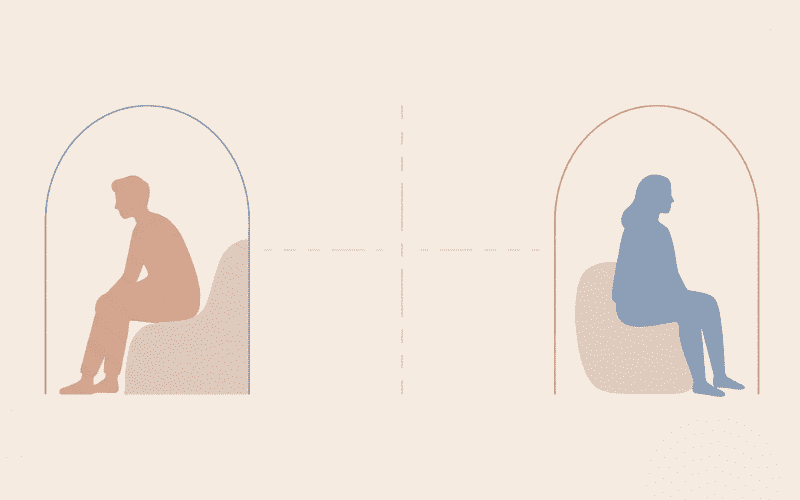
There are moments in relationships where everything looks fine on the surface, yet something feels slightly off. You may notice yourself pulling back when things get too close, or you might be on the receiving end of someone who suddenly becomes distant right after a meaningful connection.
Avoidant attachment style in relationships often hides behind calm behavior, independence, and emotional control. From the outside, it can look like confidence. Inside, it usually feels like discomfort with emotional closeness, even when love is present.
If you recognize yourself in these patterns, or if you keep attracting emotionally distant partners, this guide helps you understand what is really happening underneath those reactions, without judgment and without labels that box you in.
What avoidant attachment style in relationships really means
Avoidant attachment is a relationship pattern where emotional closeness triggers discomfort, and distance feels safer than dependence.
You might:
- Prefer handling emotional stress alone
- Feel overwhelmed when someone relies on you too much
- Struggle to express vulnerability, even with people you trust
- Keep relationships "light" instead of emotionally deep
This pattern comes from attachment theory, developed through the work of psychologist John Bowlby and researcher Mary Ainsworth. Their studies showed that early emotional experiences with caregivers shape how you connect with people later in life.
In avoidant attachment, your nervous system learns one main rule: relying on others may not feel safe, so relying on yourself feels better.
That doesn't mean you do not care. It means your system learned to protect you through emotional distance.
Signs of avoidant attachment style in relationships you may recognize
Avoidant attachment does not always look dramatic. In fact, it often looks "functional" on the outside.
Emotional signs
You might notice:
- You feel uncomfortable when emotions become intense
- You prefer not to talk about feelings deeply
- You shut down during emotional conversations
- You feel "trapped" when someone gets too close
Behavioral patterns
- You delay replies when conversations become emotional
- You stay busy to avoid emotional dependence
- You keep a strong need for personal space
- You withdraw after moments of intimacy
Thinking patterns
- "I don't need anyone"
- "I can handle this alone"
- "Emotions complicate things"
- "If I depend on someone, I lose control"
These thoughts are not random. They are protective strategies your mind uses to avoid emotional discomfort.
Relationship impact
Over time, you may notice:
- Partners feeling confused by your distance
- Cycles of closeness followed by withdrawal
- Difficulty maintaining long-term emotional intimacy
Psychology research on adult attachment patterns consistently shows that avoidant behavior often creates a push-pull dynamic in relationships, especially with partners who seek more emotional closeness.
Why avoidant attachment style develops in the first place
This pattern does not appear overnight. It is usually built through emotional learning experiences early in life.
Emotional survival strategy
Avoidant attachment is often a form of emotional self-protection:
- If closeness didn't feel safe, distance becomes comfort
- If vulnerability was met with silence, you learn to hide emotions
- If support was inconsistent, independence becomes control
Childhood emotional environment
You may have grown up in a setting where:
- Your emotional needs were ignored or minimized
- You were encouraged to "be strong" instead of expressing feelings
- Comfort was not consistently available when you were upset
Over time, your brain adapts. Instead of reaching out, you learn to rely on yourself.
Adult experiences that reinforce it
Even in adulthood, certain experiences can strengthen this pattern:
- Relationships where trust was broken
- Emotional rejection or abandonment
- Partners who were too intense or demanding emotionally
None of this makes you "broken." It simply explains why emotional closeness may feel complicated even when you genuinely care.
How avoidant attachment style in relationships affects emotional intimacy
Emotional intimacy requires openness, presence, and vulnerability. Avoidant attachment tends to create friction in all three areas.
The intimacy gap
You might feel:
- Close to someone one day
- Then suddenly distant the next
- Uncomfortable when relationships deepen too quickly
Your partner may experience this as inconsistency, even though for you it feels like "needing space."
Communication breakdown
In conflicts or emotional discussions:
- You may shut down instead of responding
- You may focus on logic instead of feelings
- You may prefer ending the conversation quickly
This can leave your partner feeling unheard, even if you believe you are resolving things efficiently.
The emotional cycle
Many relationships follow a pattern:
- You feel connection and attraction
- Closeness increases
- You begin to feel overwhelmed
- You pull away emotionally or physically
- Your partner feels insecure or anxious
- Conflict or distance grows
Research in attachment-based therapy often shows this cycle is common between avoidant and anxious attachment styles.
Can avoidant attachment style change?
Yes, but not by forcing yourself to become someone else. Change happens through awareness and gradual emotional safety-building.
Step 1: Recognize your patterns
Start noticing:
- When do you withdraw?
- What triggers emotional discomfort?
- Which relationships activate your distance?
Awareness is the foundation of change.
Step 2: Learn to stay present in small emotional moments
You don't need to jump into deep vulnerability immediately. Start with:
- Answering emotional questions instead of avoiding them
- Staying in conversations a little longer than usual
- Naming your feelings in simple words
Step 3: Rebuild trust with emotional connection
Healthy change often comes from:
- Consistent relationships
- Safe communication experiences
- Partners who respect your pace
Step 4: Professional support when needed
Many people benefit from:
- Attachment-based therapy
- Cognitive Behavioral Therapy (CBT)
- Emotionally Focused Therapy (EFT)
Clinical studies in psychotherapy show that attachment patterns can shift when emotional experiences are repeated in safe environments.
How to love someone with avoidant attachment style in relationships
If you are on the other side of this dynamic, the goal is not to chase closeness. It is to create emotional safety without pressure.
What helps
- Give space without emotional punishment
- Stay consistent instead of intense
- Communicate calmly instead of emotionally charged demands
What usually backfires
- Forcing emotional conversations
- Interpreting distance as rejection
- Constant reassurance seeking
Better communication approach
Instead of:
- "You never open up"
Try:
- "I feel closer when we talk about what's going on for you"
This reduces pressure and increases safety.
Avoidant vs other attachment styles
Understanding where avoidant attachment fits helps you see the bigger picture.
Secure attachment
- Comfortable with closeness and independence
- Communicates emotions clearly
- Handles conflict without withdrawal or panic
Anxious attachment
- Fears abandonment
- Seeks reassurance often
- Overthinks relationship changes
Avoidant attachment
- Fears emotional dependence
- Prioritizes independence
- Pulls away when closeness increases
Many real relationships fall into an anxious-avoidant loop, where one person pursues closeness while the other withdraws.
FAQs about avoidant attachment style in relationships
What is avoidant attachment style in relationships?
It is a pattern where emotional closeness feels uncomfortable, leading you to value independence and emotional distance.
Can avoidant people love deeply?
Yes. Love exists, but expression and emotional openness may feel difficult or unsafe.
Why do avoidant partners pull away?
Because emotional intensity can trigger discomfort, leading to withdrawal as a coping response.
Is avoidant attachment permanent?
No. With awareness and emotional work, it can shift toward more secure attachment patterns.
How do you deal with avoidant attachment in relationships?
By respecting space, communicating calmly, and building trust gradually instead of forcing emotional depth.
Final thoughts: understanding your emotional patterns changes everything
Avoidant attachment style in relationships is not about lack of feelings. It is about protection that once made sense, but now may be affecting how you connect with others.
When you understand your emotional reactions instead of fighting them, relationships stop feeling confusing and start becoming clearer.
You don't need to change who you are. You need to understand what your emotional system learned, and slowly give it new experiences where closeness does not feel like a threat.
Call to action
If this sounds familiar, start by observing one pattern this week without judging it. Notice when you pull away, and what you were feeling right before it happened. Awareness alone is already a strong first step toward healthier emotional connection.