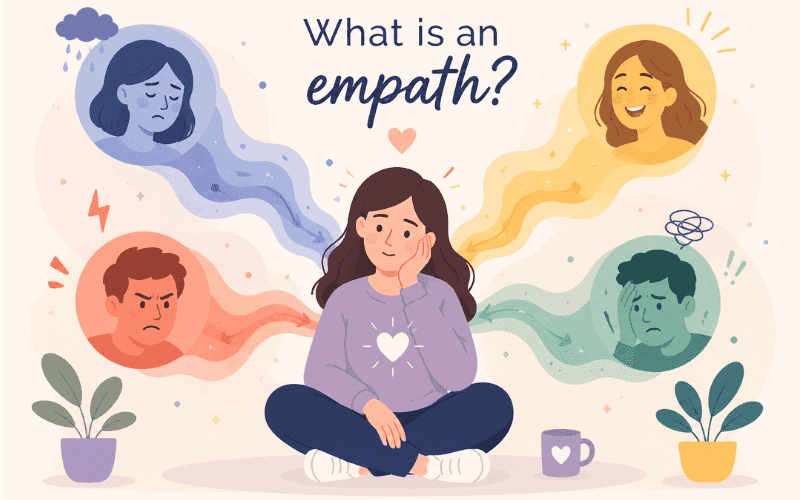
Have you ever felt emotionally exhausted after spending time with certain people? Maybe you instantly notice when someone is upset, even when they try to hide it. If this sounds familiar, you may have wondered what is an empath and why you seem to feel emotions so deeply. Understanding empathy and emotional sensitivity can help you better understand yourself and the way you connect with others.
What Is an Empath?
An empath is someone who feels deeply connected to the emotions of other people. Instead of simply noticing another person's feelings, you may actually absorb those emotions and experience them yourself. If someone around you is anxious, sad, stressed, or excited, you might feel those emotions strongly even when nothing directly happened to you.
Many people are empathetic, but an empath person often experiences emotions on a much deeper level. You may naturally sense emotional energy, notice small emotional changes, or feel emotionally overwhelmed in crowded or stressful environments.
Being an empath is not officially considered a medical diagnosis. However, emotional sensitivity is very real, and many psychologists recognize that some people naturally process emotions more intensely than others.
Signs You Might Be an Empath
You may be an empath if several of these signs feel familiar to you:
- You quickly absorb other people's moods
- Loud or crowded places drain your energy
- You feel emotionally exhausted after helping others
- You are very sensitive to conflict
- You often know how someone feels before they speak
- You prefer deep conversations over small talk
- People naturally come to you for emotional support
- You struggle to say no
- You need alone time to emotionally recharge
Some people discover they are empaths after years of feeling "too emotional" or overwhelmed without understanding why.
What Does an Empath Person Feel Like?
Being an empath can feel both rewarding and exhausting. On one hand, you may form deep emotional connections and understand people in a way others cannot. On the other hand, carrying emotional energy from everyone around you can become mentally draining.
Emotional Sensitivity
An empath person often experiences emotions intensely. If someone near you is stressed, you may start feeling anxious yourself. If a friend is heartbroken, you might carry their sadness for hours or even days.
This emotional sensitivity can make you compassionate and caring, but it can also leave you emotionally overloaded.
Strong Intuition
Empaths usually have strong instincts. You may sense tension in a room immediately or notice when someone is hiding their true feelings. Sometimes your intuition feels so accurate that it surprises even you.
Many empaths describe this as a "gut feeling" that helps them understand people beyond words.
Physical Reactions to Emotional Energy
Emotional stress does not only affect your mind. Many empaths experience physical symptoms after emotionally intense situations.
These can include:
- Fatigue
- Headaches
- Difficulty sleeping
- Anxiety
- Emotional exhaustion
- Feeling overstimulated in public places
Your body and mind often react together when emotions become overwhelming.
What Causes Someone to Become an Empath?
There is no single explanation for why some people are more emotionally sensitive than others. Usually, several factors work together.
Personality Traits
Some people are naturally more emotionally aware from childhood. You may have always been sensitive to emotions, sounds, or the mood around you.
Highly sensitive personalities often notice details and emotional changes that others overlook.
Childhood Experiences
Your environment during childhood can also influence emotional sensitivity. If you grew up in a stressful or unpredictable environment, you may have learned to closely observe emotions for safety or emotional protection.
Children who frequently had to "read the room" often become emotionally aware adults.
Genetics and Emotional Sensitivity
Research suggests that some people may be biologically more sensitive to emotional stimulation. Certain personality traits related to empathy and sensitivity may run in families.
This does not mean being an empath is a weakness. It simply means your nervous system may respond more strongly to emotional experiences.
Empath vs Empathetic: What's the Difference?
Many people confuse empathy with being an empath, but they are not exactly the same thing.
Being Empathetic
Being empathetic means you can understand and care about another person's feelings. Most people experience empathy to some degree.
For example, if your friend loses their job, you may understand their sadness and emotionally support them.
Being an Empath
An empath person often goes beyond understanding emotions. You may actually absorb emotional energy and physically feel another person's emotional state.
Instead of simply recognizing sadness, you might personally experience heaviness, anxiety, or emotional pain yourself.
How to Explain That You Are Empathetic
Sometimes it can feel difficult to describe emotional sensitivity to others, especially if they do not experience emotions the same way you do.
Here are a few simple ways to explain that you are empathetic:
- "I naturally feel emotions deeply."
- "I notice emotional energy quickly."
- "I emotionally connect with people easily."
- "I tend to absorb the feelings around me."
- "I care deeply about how others feel."
You do not need to overexplain yourself. Emotional awareness is part of who you are.
Different Types of Empaths
Not all empaths experience emotions in the same way. Some people are emotionally sensitive, while others are more connected to physical energy or intuition.
Emotional Empaths
These empaths strongly absorb emotions from other people. You may instantly feel sadness, stress, or excitement around you.
Physical Empaths
Physical empaths are sensitive to physical discomfort and energy. You may notice headaches, tension, or exhaustion after spending time around stressed people.
Intuitive Empaths
Intuitive empaths rely heavily on instincts and gut feelings. You may sense emotional truths even when nobody says anything directly.
Social Empaths
Social empaths are highly affected by the emotional atmosphere of groups or crowded environments. Busy spaces may quickly overwhelm your energy.
Nature Empaths
Some empaths feel deeply connected to animals, nature, and the environment. Spending time outdoors may help you feel emotionally balanced and calm.
Challenges Empaths Often Face
Being emotionally sensitive can create unique challenges in daily life. Without emotional boundaries, you may become emotionally exhausted very quickly.
Emotional Burnout
One of the biggest struggles for empaths is emotional burnout. Constantly carrying emotional energy from others can drain your mental and physical health.
Signs of burnout include:
- Feeling tired all the time
- Losing motivation
- Emotional numbness
- Irritability
- Anxiety
- Difficulty concentrating
Many empaths focus so much on helping others that they forget to care for themselves.
Difficulty Setting Boundaries
If you are highly empathetic, you may struggle to say no because you do not want to disappoint people. Unfortunately, this can attract emotionally draining relationships.
Healthy boundaries are extremely important for emotional balance.
Overthinking Other People's Problems
Empaths often replay conversations and worry deeply about people they care about. You may feel responsible for solving emotional problems that are not actually yours to carry.
This emotional pressure can become overwhelming over time.
Why Empaths Attract Toxic Relationships
Because empaths are compassionate and understanding, emotionally unhealthy people may become attached to them.
Some toxic individuals seek constant emotional attention and support without giving anything back. Since you naturally want to help people, you may ignore red flags or stay too long in unhealthy situations.
Common signs of toxic emotional dynamics include:
- Feeling emotionally drained after conversations
- Constant guilt
- Feeling responsible for someone else's happiness
- One sided emotional support
- Emotional manipulation
Learning to recognize these patterns can protect your emotional well being.
How Empaths Can Protect Their Energy
Being emotionally sensitive does not mean you must constantly feel overwhelmed. With healthy habits, you can protect your emotional energy while still caring deeply about others.
Spend Time Alone
Alone time allows your mind and nervous system to reset. Quiet moments help you separate your emotions from the emotions you absorbed from others.
Learn to Say No
Protecting your energy sometimes means disappointing people. Saying no is not selfish. It is necessary for emotional balance.
Limit Emotional Overload
You do not need to constantly consume stressful news, drama, or emotionally intense environments. Reducing emotional stimulation can improve your mental health.
Practice Mindfulness
Meditation, deep breathing, and mindfulness exercises can help you stay emotionally grounded. These habits teach you to observe emotions without absorbing everything around you.
Spend Time in Nature
Nature often helps empaths feel calm and emotionally refreshed. A simple walk outside can reduce emotional stress and mental overload.
Journal Your Emotions
Writing down your thoughts can help you identify which emotions belong to you and which emotions may have been absorbed from others.
Is Being an Empath a Good Thing?
Many empaths grow up believing their sensitivity is a weakness. In reality, emotional awareness can become one of your greatest strengths when managed properly.
Benefits of Being an Empath
Empaths often have qualities that make relationships stronger and more meaningful.
These strengths include:
- Deep compassion
- Emotional intelligence
- Strong intuition
- Excellent listening skills
- Genuine kindness
- Strong emotional connections
People often feel emotionally safe around empaths because they feel understood and accepted.
When Empathy Becomes Too Much
Even positive traits can become unhealthy without balance. Constant emotional absorption can lead to anxiety, stress, and emotional exhaustion.
The goal is not to stop caring. The goal is to care without losing yourself emotionally.
Can You Stop Being an Empath?
You cannot completely change your emotional sensitivity, but you can learn how to manage it in healthier ways.
Instead of shutting down your emotions, focus on building emotional boundaries. This allows you to stay compassionate without constantly feeling emotionally overwhelmed.
Over time, many empaths learn how to separate their own emotions from the emotions around them.
How to Thrive as an Empath
If you are emotionally sensitive, self awareness is one of the most important skills you can develop.
Here are simple ways to thrive as an empath:
- Protect your emotional space
- Avoid emotionally draining people
- Prioritize rest and self care
- Accept your sensitivity instead of fighting it
- Practice emotional boundaries daily
- Spend time with emotionally healthy people
- Trust your intuition while staying grounded
Your sensitivity does not need to control your life. When managed well, it can become a powerful strength.
FAQ About What Is an Empath
What is an empath in simple words?
An empath is a person who deeply feels and absorbs the emotions of others.
Is being empathetic the same as being an empath?
No. Being empathetic means understanding emotions, while an empath person may strongly feel those emotions internally.
How do I know if I am an empath?
You may be an empath if you strongly absorb emotions, feel emotionally drained around people, and notice emotional energy very quickly.
Is being an empath real?
While "empath" is not an official medical diagnosis, emotional sensitivity and deep empathy are real psychological experiences.
How to explain that you are empathetic?
You can explain it by saying that you naturally understand emotions deeply and emotionally connect with people very easily.
Conclusion
Understanding what is an empath can help you make sense of emotional experiences that once felt confusing or overwhelming. If you absorb emotions deeply, feel emotionally drained around certain people, or constantly care for others, you are not alone.
Your emotional sensitivity can become a powerful strength when balanced with healthy boundaries and self care. Instead of seeing your empathy as a burden, learn how to protect your energy while continuing to care deeply about the people around you.
If this article helped you better understand yourself, consider sharing it with someone who may also relate to being an empath person.